WASHINGTON, D.C. – U.S. Senator Deb Fischer (R-Neb.), a member of the Senate Commerce Committee, spoke on the Senate floor today about the Biden Administration’s unrealistic plan for electric vehicles and the many issues this top-down government mandate will pose for energy security and the lives of the American people.
Sen. Fischer highlighted concerns over the stability of our power grid, vehicular safety, the solvency of the Highway Trust Fund, China’s dominance of the EV battery supply chain, and the fact that the majority of Americans oppose the phase out of gasoline-powered cars and trucks by 2035.
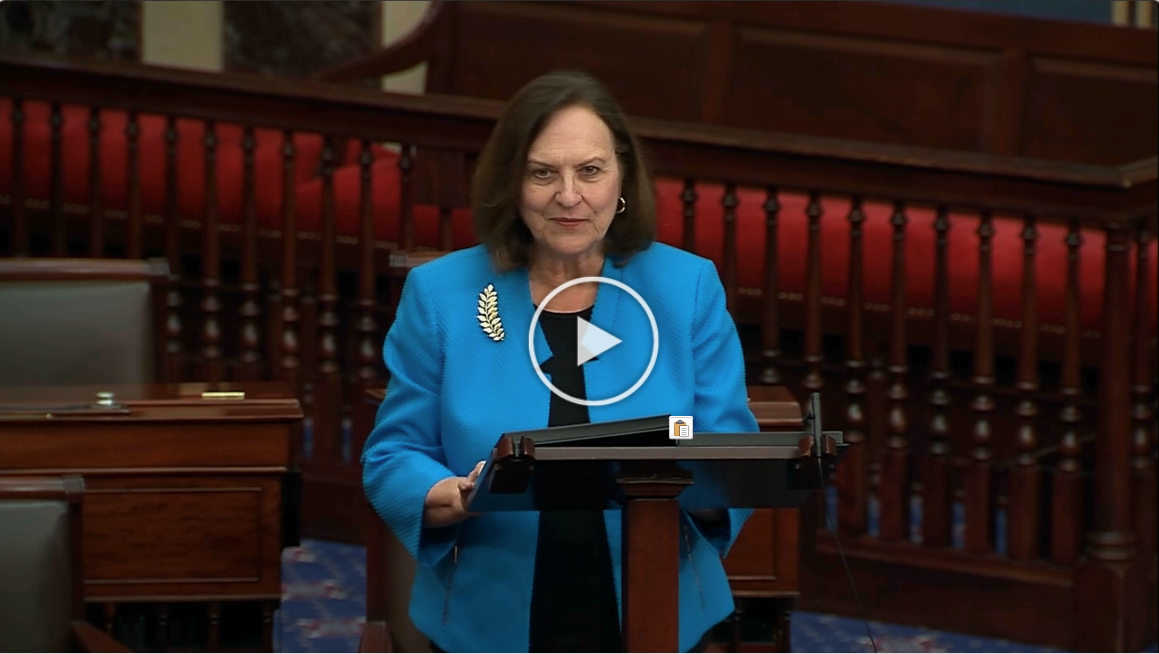
Click the image above to watch video of Sen. Fischer’s remarks
Click here for audio
On Stability of Power Grid:
During a heat wave last September, power authorities in California had to ask residents to avoid charging their electric cars in the evenings, for fear that the power grid would malfunction from being overwhelmed.
Imagine what would happen if EV use increased exponentially like the Biden administration wants.
If EV use is going to increase, it should be a natural growth driven by consumers, rather than an artificial spike manufactured by the government. That way, power producers and electrical grids have time to grow and adapt to new spikes in electricity demand.
On Vehicular Safety:
Electric vehicles can weigh up to three times as much as gas-powered cars because of their heavy batteries. The force of an EV hurtling toward another car in a crash is intensified by all that weight.
A heavy EV accidentally crashing into a lighter, older car is a recipe for severe injury or death — the heavier the car, the higher the risk of fatality in a crash…
This safety risk disproportionately affects women. A report released last month by the Government Accountability Office found that crash tests, which identify car safety issues that might endanger passengers in an accident, don’t use physiologically accurate female dummies. Some only use male dummies — they don’t even attempt to test car safety on the female body. This is part of why crashes injure and kill women at higher rates than men.
On Solvency of Highway Trust Fund:
But right now, only gas-powered cars pay into the Highway Trust Fund, or HTF, which provides 90 percent of federal highway assistance. This fund repairs wear and tear from vehicles on the highway.
The sale or charging of EVs doesn’t contribute anything to the HTF. But the HTF exists to fix exactly the type of damage that heavy EVs can cause — so it’s only fair that both gas-powered and electric vehicles pay into the fund.
I plan to introduce a bill soon that would fix this discrepancy.
On China:
We know that China completely dominates the EV battery supply chain — and that’s not going to change anytime soon.
Sixty to 100 percent of all battery minerals are processed in China, according to an energy think tank known as SAFE. Our domestic supply isn’t anywhere near the demand that would result from this new regulation.
And it is so ironic that many of the same activists who support an electric vehicle mandate oppose the U.S. mining needed to make EV batteries. They would rather use horrible mining practices in other countries and support very dangerous working conditions for the miners.
On the Public’s Preferences:
A recent Pew Research poll found that the majority of Americans oppose the Biden administration’s plan to phase out gasoline-powered cars and trucks by 2035.
A Gallup poll found that four percent of Americans own an EV, and only 12 percent are seriously considering getting one. Forty-one percent claimed that they will never buy an EV.
Sixty percent of people say they think EVs are too expensive. The price of EVs would have to come down by about $15,000 for the average American to see them as real competitors to gas-powered cars.
Full speech as prepared for delivery:
M. President,
This presidential administration has consistently been marked by egregious overreach. Over the past few months, we’ve seen them try to regulate everything from our states’ waters to our retirement funds.
Now, the Biden administration wants to control which cars Americans are able to drive.
Last week, the Environmental Protection Agency issued new regulations cracking down on vehicle emissions. These new standards make it harder for people to drive gas-powered cars, in an attempt to coerce Americans into purchasing new electric vehicles, or EVs — vehicles that cost about as much as the average family makes in a year.
These regulations are part of a so-called “emissions plan,” but there is nothing realistic about what the Biden administration is trying to do.
The administration says it wants 67 percent of the cars in the country to be electric by 2032 — just nine years from now. Last year, EVs only accounted for six percent of new automobile sales. And the International Energy Agency predicts that by 2030, EVs will only make up 15 percent of the vehicles in our country.
M. President, we need to tell it like it is: the White House’s plan is based on the speculative wish that EVs will make an inconceivable jump from a tiny fraction of our vehicles to the majority of them — in less than a decade.
This so-called “plan” is really a pipe dream, and the facts show that the EPA’s goals are highly unlikely, if not impossible.
The administration is using its imagination to try to create a world that real Americans don’t even want — and in the process, it’s ignoring the many complexities at play when it comes to electric vehicles.
Let’s talk about some of those complexities.
Electric vehicles rely on the electric power grid, and a massive increase in EV use, like the Biden administration wants, could cause serious issues with the grid.
During a heat wave last September, power authorities in California had to ask residents to avoid charging their electric cars in the evenings, for fear that the power grid would malfunction from being overwhelmed.
Imagine what would happen if EV use increased exponentially like the Biden administration wants.
If EV use is going to increase, it should be a natural growth driven by consumers, rather than an artificial spike manufactured by the government. That way, power producers and electrical grids have time to grow and adapt to new spikes in electricity demand.
The EV mandate also overlooks some serious public safety concerns. Electric vehicles can weigh up to three times as much as gas-powered cars because of their heavy batteries. The force of an EV hurtling toward another car in a crash is intensified by all that weight.
A heavy EV accidentally crashing into a lighter, older car is a recipe for severe injury or death — the heavier the car, the higher the risk of fatality in a crash.
The Biden administration itself admits this. National Transportation Safety Board Chair Jennifer Homendy said that she was “concerned about the increased risk of severe injury and death for all road users from increasing size, power, and performance of vehicles on our roads, including electric vehicles”.
This safety risk disproportionately affects women. A report released last month by the Government Accountability Office found that crash tests, which identify car safety issues that might endanger passengers in an accident, don’t use physiologically accurate female dummies. Some only use male dummies — they don’t even attempt to test car safety on the female body. This is part of why crashes injure and kill women at higher rates than men.
Before mandating a rush of electric vehicles on the roads, the Biden administration needs to find a solution to the risks these cars can pose, especially to women.
Heavy cars like EVs put extra stress and damage onto our roads as well. Their weight pulverizes the road bed, causing more maintenance, more upgrades, and more costs.
But right now, only gas-powered cars pay into the Highway Trust Fund, or HTF, which provides 90 percent of federal highway assistance. This fund repairs wear and tear from vehicles on the highway.
The sale or charging of EVs doesn’t contribute anything to the HTF. But the HTF exists to fix exactly the type of damage that heavy EVs can cause — so it’s only fair that both gas-powered and electric vehicles pay into the fund.
I plan to introduce a bill soon that would fix this discrepancy. We need to do this to address some of the complexities at play with electric vehicles — and especially a unilateral government mandate that would push for so many on our roads so soon.
The electricity and road concerns related to EVs should be enough to temper the Biden administration’s fanciful ambitions for a massive electric vehicle push. But the repercussions of a federal EV mandate go beyond American borders.
We know that China completely dominates the EV battery supply chain — and that’s not going to change anytime soon.
Sixty to 100 percent of all battery minerals are processed in China, according to an energy think tank known as SAFE. Our domestic supply isn’t anywhere near the demand that would result from this new regulation.
And it is so ironic that many of the same activists who support an electric vehicle mandate oppose the U.S. mining needed to make EV batteries. They would rather use horrible mining practices in other countries and support very dangerous working conditions for the miners.
Also, this means that a push for EVs is a push for energy dependence on China. And China is not our friend, as news this week about a secret Chinese police station in New York City remind us. Our turbulent relationship with the Chinese Communist Party means it will use any dependence we have on China to its own advantage.
Americans don’t want to rely on China for our vehicles. But studies also show that Americans aren’t even interested enough in EVs to merit a government mandate.
A recent Pew Research poll found that the majority of Americans oppose the Biden administration’s plan to phase out gasoline-powered cars and trucks by 2035.
A Gallup poll found that four percent of Americans own an EV, and only 12 percent are seriously considering getting one. Forty-one percent claimed that they will never buy an EV.
Sixty percent of people say they think EVs are too expensive. The price of EVs would have to come down by about $15,000 for the average American to see them as real competitors to gas-powered cars.
Americans have the right to buy electric vehicles if they so choose, and I support that right — but they should also have the right not to buy one.
Our government is supposed to be of the people, by the people, and for the people. But frankly, this federal mandate is of the EPA, by the EPA, and for the EPA. It’s not based in the interests of the American people — only in the interests of a power-hungry White House.
President Biden is blindly prioritizing electric vehicles — and by extension, the small slice of Americans who want and can afford EVs – without adequately considering the effects of a top-down government mandate on energy security and the lives of the American people.
The Biden administration’s plan for a utopia of perfectly green vehicles is a cute idea, but it’s completely out of touch with reality. It’s also out of touch with Americans’ real needs and desires.
This administration has got to stop with these top-down mandates that force Americans into outcomes they wouldn’t choose themselves.
In the meantime, I hope my Senate colleagues will join me in advocating for what Americans really want and pushing back on this administration’s overreach.
Thank you. I yield the floor.
# # #