Senator Also Slams HHS Secretary on Administration’s Push to Extend Temporary, Partisan Priorities: “COVID Emergency Funding Was Never Intended to be Indefinite.”
WASHINGTON, D.C. – At a Senate Appropriations Committee hearing this week, U.S. Senator Deb Fischer (R-Neb.) pressed U.S. Department of Homeland Security Secretary Alejandro Mayorkas on the historic crisis at the U.S. southern border. During the hearing, Senator Fischer urged the Biden administration to enact substantive policy changes to address the border crisis, like tightening asylum standards or limiting the use of parole. As Senator Fischer noted, 169 migrants with positive terrorism watchlist matches were arrested between ports of entry on the southern border in Fiscal Year 2023.
Senator Fischer also questioned U.S. Department of Health and Human Services Secretary Xavier Becerra on the administration’s attempts to extend a temporary program that was included in the partisan American Rescue Plan and expired on September 30, 2023. Senator Fischer stressed the need to address America’s important childcare challenges through the regular appropriations process — including amendments and open debate — instead of inconsistent year-end supplemental packages.
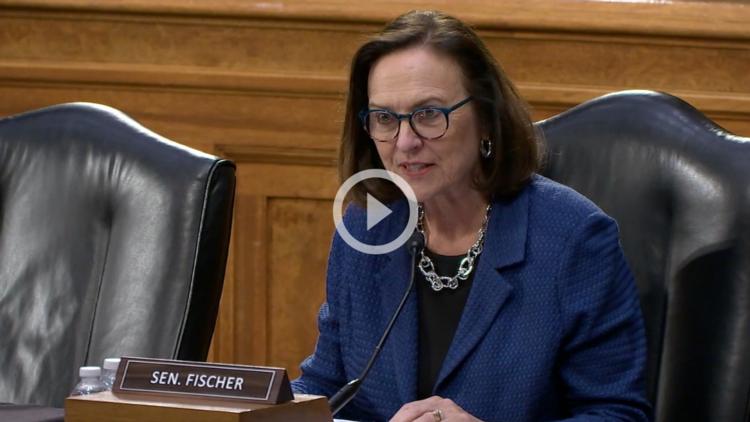
Click the image above to watch video of Sen. Fischer’s remarks
Click here to download audio
Click here to download video
Following is a transcript of Senator Fischer’s remarks:
As I said last week, there is a national security crisis at our southern border. FY 2023 set a record of total encounters — almost 2.5 million. This September set a new monthly record for encounters along the southwest border, nearly 270,000.
The Biden administration also sets a new record of encounters of individuals on the terrorist watch list between ports of entry: 169 total arrests on the southern border. That is more than the previous three fiscal years combined.
Secretary Mayorkas, that is not a record to be proud of. President Biden’s national security supplemental request included $13.6 billion for the border and migration, including nearly $9 billion for DHS with very few details of how DHS intends to spend that funding.
Money alone is not going to solve this crisis. That’s clear. We must make policy changes to that. And I appreciate some colleagues on the other side of the aisle who recognize that that can be done incrementally.
Whether it’s tightening our asylum standards or limiting the use of parole to a case-by-case basis, policies must be enacted to stem the flow of migration to our southern border.
We’ve come to this hearing today to address emergencies. Natural disasters are emergencies. Our southern border is an emergency. Helping our friends defend themselves against brutal attacks, that’s an emergency.
But the latest supplemental request really stretches the definition of what an emergency is. For example, I agree that the child care shortage is a crisis, and that thoughtful and sustained attention is necessary. However, we need to be honest with the American people. We have to differentiate between emergency spending and long-term investment in our national priorities.
The Child Care Development Block Grant is a bipartisan program with a storied history that should be supported, and it should be improved. ARPA created the Child Care Stabilization Fund to instead support a new program that had a firm expiration date of September 30, 2023. The program in ARPA was created through a partisan reconciliation package to address what we were told was the immediate child care emergency caused by COVID and prolonged lockdowns.
COVID emergency funding was never intended to be indefinite. This committee knew it would expire. This Congress knew it would expire. The Biden administration knew it would expire. And Mr. Secretary, you knew it would expire.
Knowing that it was set to expire in September of 2023, in your FY 24 budget request, you requested $9 billion for the Child Care Block Grant Program. But now, just few months later, you’re here, and you’re highlighting a completely manufactured cliff, asking for $16 billion to supplement regular order appropriations. That’s not how to effectively run a government.
And it’s a concerning trend throughout this request. As a government, we cannot continue to bolster certain priorities through unsustainable and really unreliable year-end emergency supplementals instead of addressing priorities through regular order and budgeting.
So, Secretary Becerra, you state that if Congress does not provide additional funding for the COVID emergency child care fund, working families across the country are going to suffer the consequences with higher out of pocket costs, fewer options for care, more women leaving the workforce.
And none of us up here want that, not one person up here wants to see that happen. But my question to you is this: do you believe that throwing in a request for $16 billion for an expired program into an end of the year emergency supplemental request is an effective way to address one of the most pressing issues facing families? Why didn’t you address it in the budget request?
You know, I joined this committee, and I thank the Chairwoman. I thank the Ranking Member for following regular order. You know, we went through hearings. We went through markups. But to me, this is going around the appropriations process, and I am upset by that.
I think, for a government to run and for families and businesses to have certainty in their lives, we need to identify those priorities, be honest about them and do it in regular order. And sir, I don’t believe this is.